Integrating Elements in Ornamental Art
75 reviews across the courses here, averaging 4.9 out of 5.
Plan how your motifs relate before you draw, so a page of well-drawn elements reads as one composition rather than a collection.
Secure checkout via Razorpay
Also included in the OB Art Circle membership, from ₹1,100/month.
What you'll learn
- See why a composition can look assembled even when every element is well drawn
- Set the main axis, movement, focal point and spaces before a single motif goes down
- Relate motifs through movement, scale, direction, repetition, overlap and negative space
- Connect elements that do not touch, so a design holds together across open space
- Judge your own work element by element, and stop filling gaps
What you will work through
You can draw a good flower, a good leaf and a good scroll and still end up with a page that looks like three drawings sharing a sheet of paper. Nothing is badly made, every element is placed with care, and the design still refuses to settle. The usual response is to add something to the gaps, which only makes the collection larger.
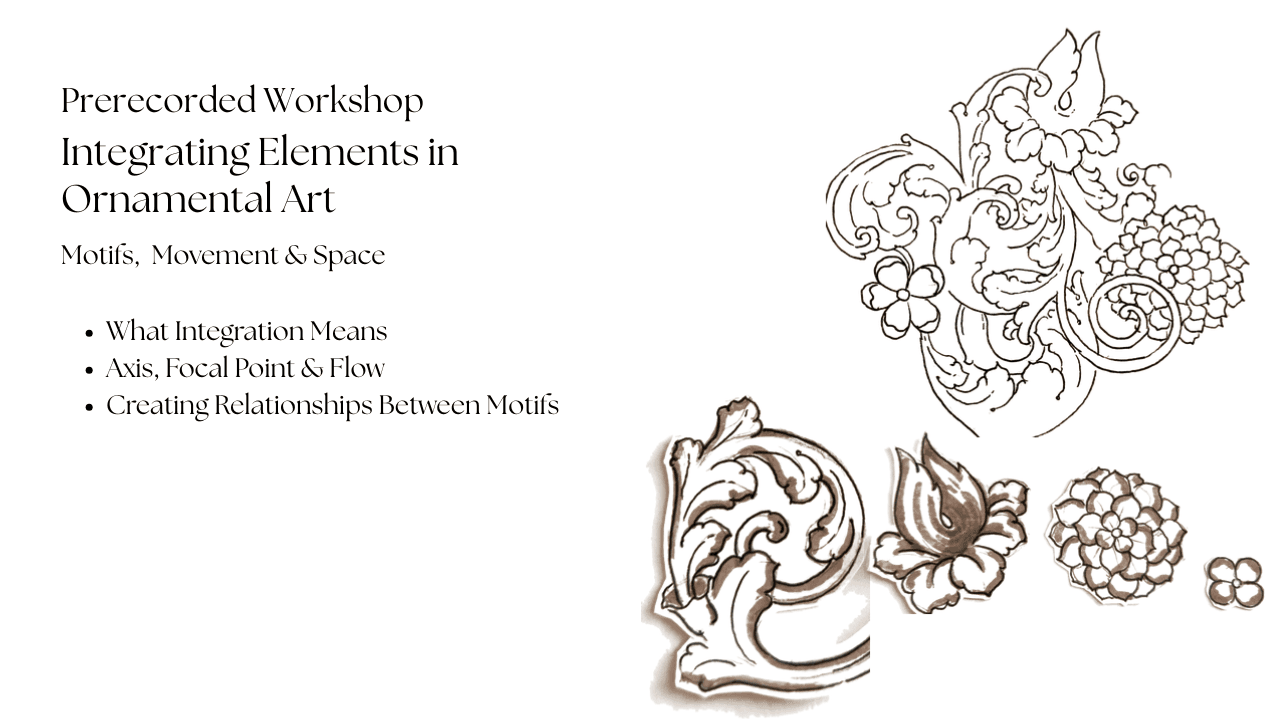
In this workshop we treat integration as something you plan before you draw, not something you hope will appear at the end. We begin with two designs side by side: one where flowers, leaves, scrolls and decorative details sit apart, and one where the same elements belong to a single visual system. The difference is almost never the quality of the drawing. That matters more than it sounds: while you believe a weak composition is a drawing problem, you keep redrawing the elements and getting the same result.
Then we set the structure a composition needs before any motif goes down: the main axis, the primary movement, the focal point, the supporting areas, the direction of flow, and the major and minor spaces. We work through a simple composition and reveal that framework step by step, so you can see how it decides where each element belongs, and why a design built without one ends up with awkward gaps you feel obliged to fill.
Finally we look at how motifs answer one another: flower to leaf to scroll, scroll to acanthus to connector, a large flower echoed by a small one and then by the foliage. Similar curves, repeated shapes, shared directions and relationships of scale do this work. Two elements do not need to touch to feel connected, and once you know that, you can hold a composition together across open space instead of crowding everything towards the centre.
By the end you will be able to look at a composition of your own and say, element by element, which parts are genuinely related and which are merely nearby. A design holds together through the relationships between its parts, not the number of them: four well-related elements will always beat twelve unrelated ones.
Best for
- Artists who draw individual motifs well but find their compositions still look assembled
- Anyone who has finished a design, felt something was wrong with it, and not been able to say what
- Beginners bringing two or three elements together for the first time
- Confident artists who want a design to hold together as one visual system
- Artists interested in ornamental drawing, botanical illustration, engraving-inspired design, architectural ornament, surface pattern or pen-and-ink work
Requirements
- Comfortable drawing a few individual motifs, such as a flower, a leaf or a scroll
- Beginners putting two or three elements together for the first time are welcome
Materials
- Pencil
- Eraser
- Fineliner or ink pen
- Drawing paper or a sketchbook, A4 or larger
5 lessons · 1h 22m
- 01Introduction2m Preview
- 02What Is Integration4m Locked
- 03Integration Study with Examples28m Locked
- 04Identifying Ornamental Structure12m Locked
- 05Integration of Elements in a Composition35m Locked
Anjali Singh

Anjali Singh is the artist behind Ooshybooshy, specialising in floral, ornamental and acanthus art. 297 students have enrolled in her courses, and she teaches inside the OB Art Circle too, taking people from first strokes to confident, balanced ornamental compositions and sharing her process for structure, references, composition and intricate detailing. More about Anjali.
Reviews
No one has reviewed this course yet. What can be said is the rest: 297 people have enrolled in a course here, and the 75 reviews left on the other courses average 4.9 out of 5.
Yours could be the first review on it.
Questions, answered
Should I buy this course once, or subscribe?+
Both work. A one-time purchase gives you lifetime access to this course, yours to revisit forever. An OB Art Circle membership instead opens this course and every other included course to you, for as long as your subscription stays active.
What materials do I need?+
Each lesson lists what to use. For most ornamental work a sketchbook, pencil, eraser and a fineliner pen are enough to begin.
Is this suitable for my level?+
This course is pitched at an intermediate level, but every step is demonstrated slowly so motivated beginners can follow along.
How do I pay?+
Indian customers pay in INR via Razorpay; international customers pay in USD via PayPal. Your currency is selected automatically.
Where to go next

How to Draw Scroll Connectors: Knots and Ties
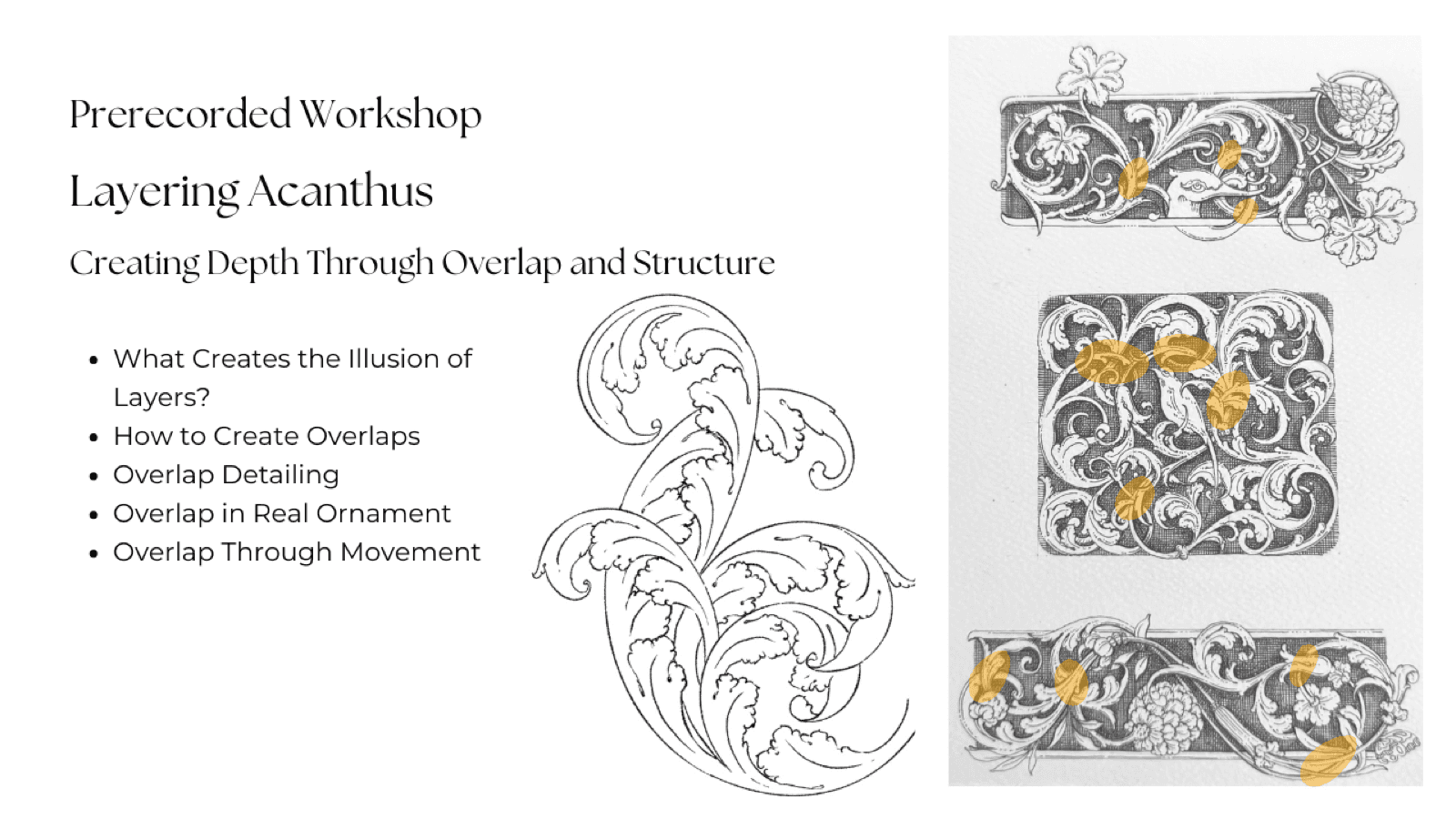
Layering Acanthus
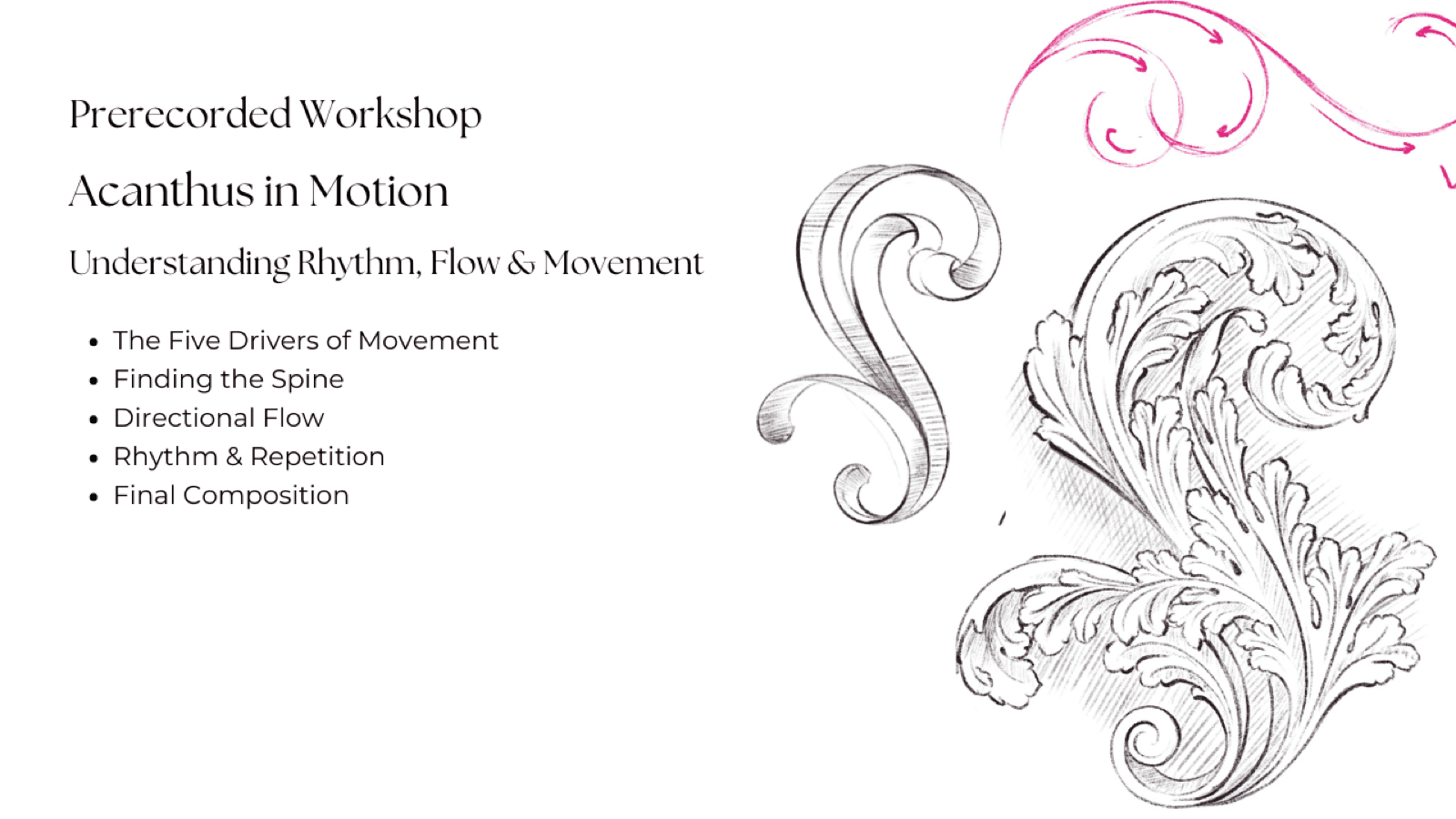
Acanthus in Motion
Would you like to try it before you buy? I have written a free step by step tutorial on the same motif: A Beginner's Guide to Ornamental Art.
Start learning today
Secure checkout via Razorpay
Also included in the OB Art Circle membership.