Acanthus in Motion
75 reviews across the courses here, averaging 4.9 out of 5.
Learn to see what carries movement in an acanthus, and set it deliberately before you draw a single lobe.
Secure checkout via Razorpay
Also included in the OB Art Circle membership, from ₹1,100/month.
What you'll learn
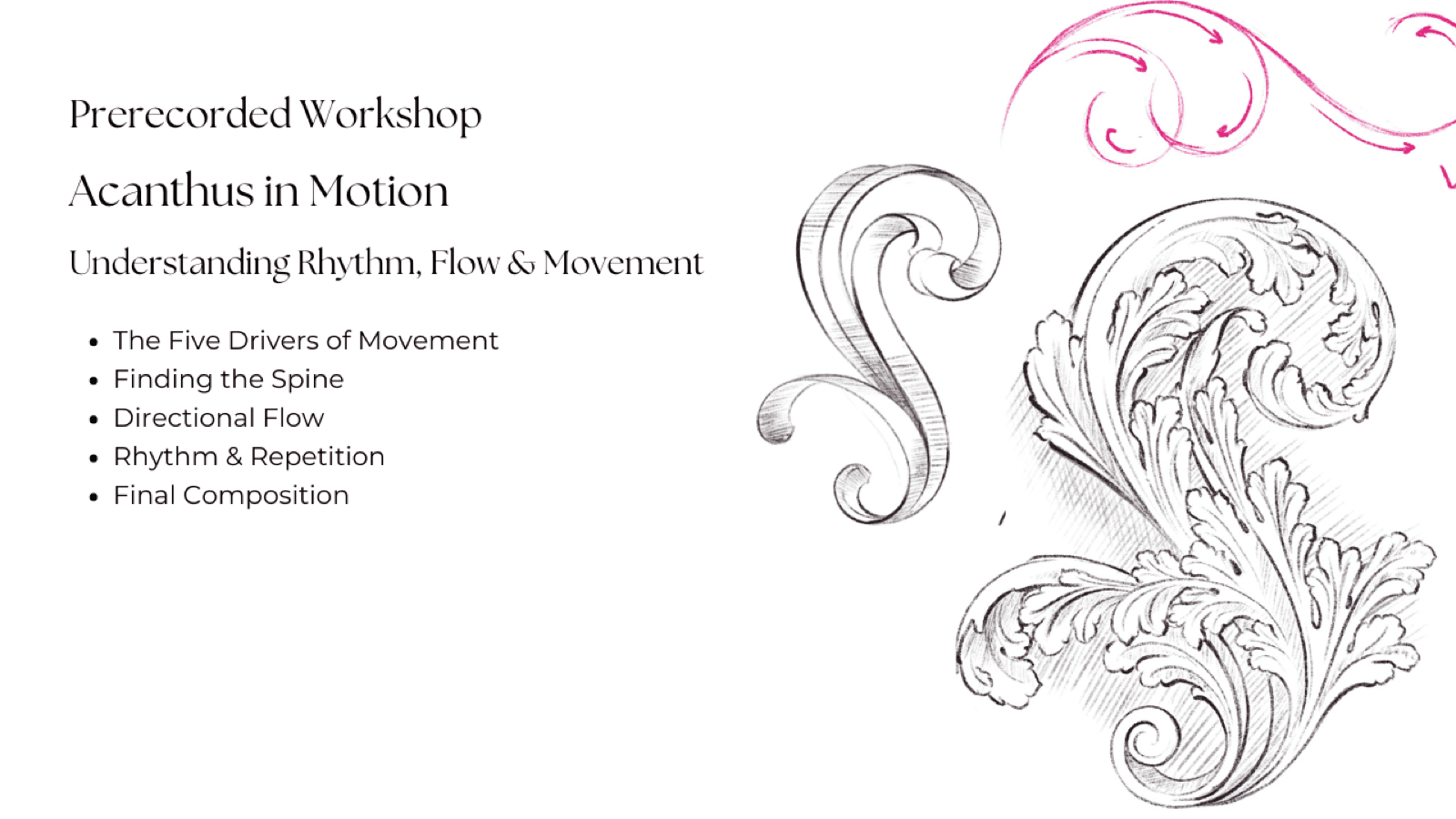
- Name the five drivers of movement: direction, rhythm, variation, compression and expansion, and curvature
- Set the spine before you draw a single lobe
- Keep a run of scrolls reading as one movement instead of fighting itself
- Build rhythm from ordered change rather than guesswork
- Spot the gesture line running underneath carved friezes and historical ornament
- Look at any acanthus and say what is carrying its movement and what is holding it back
What you will work through
Most artists learn to draw an acanthus leaf long before they learn to make one move. The shapes are correct, the lobes are carefully finished, and yet the leaf sits completely still on the page. The usual response is to add more detail, when in fact the problem was settled long before any detail was drawn.
In this workshop we treat movement as something you decide rather than something you hope for. Through comparisons and marked-up examples, you will learn to see the five things that make a leaf feel alive, find the single line every acanthus is built on, and read the flow of ornament the way its original designers did.
What is inside this workshop
We begin by comparing two acanthus leaves, one stiff and one flowing, and working out exactly what separates them. From there we name the five drivers of movement: direction, rhythm, variation, compression and expansion, and curvature. Each is shown on its own before you read all five at work together in a single marked-up leaf.
Next we move to the spine, the one gesture line that every acanthus hangs on. You will see how a spine is chosen before any ornament exists, look at a few spine variations, and learn to spot the line running underneath carved friezes and finished historical ornament.
We then study directional flow, which is how every lobe agrees with the spine that carries it, along with the rule that keeps a run of scrolls reading as one movement: set your scroll guidelines in one flow only, either all forward or all backward, and never mix the two.
After that comes rhythm, and the three relationships that do most of the work: large to medium to small, open to tight, and convex to concave.
We finish by building a complete composition together, putting every one of these ideas into a single piece of ornament so you can see how they support one another in practice.
By the end of the workshop
You will be able to look at any acanthus, your own or someone else's, and say what is carrying its movement and what is holding it back. You will know how to set a spine before drawing a single lobe, how to keep a run of scrolls flowing in one direction, and how to build rhythm out of ordered change rather than guesswork.
More importantly, you will stop thinking of movement as something some artists simply have. It is a set of decisions, all five of them can be named, and once you can name them you can put them into every leaf you draw.
Best for
- Artists whose acanthus leaves come out stiff, symmetrical or oddly lifeless
- Beginners drawing their first ornamental leaves
- Experienced artists with a confident hand who want their work to carry more energy
- Anyone drawn to ornamental drawing, botanical illustration, engraving-inspired design, architectural ornament or pen and ink
Requirements
- No previous experience with ornamental drawing needed
- A willingness to look closely and compare before you start drawing
Materials
- Pencil
- Eraser
- Fineliner or ink pen
- Drawing paper or a sketchbook, A4 or larger
6 lessons · 1h 26m
- 01Introduction2m Preview
- 02What Is Motion in Acanthus7m Locked
- 03Finding the Spine5m Locked
- 04Directional Flow9m Locked
- 05Lobes and Variation34m Locked
- 06Final Design30m Locked
- Acanthus in Motion ManualLocked
Anjali Singh

Anjali Singh is the artist behind Ooshybooshy, specialising in floral, ornamental and acanthus art. 298 students have enrolled in her courses, and she teaches inside the OB Art Circle too, taking people from first strokes to confident, balanced ornamental compositions and sharing her process for structure, references, composition and intricate detailing. More about Anjali.
Reviews
No one has reviewed this course yet. What can be said is the rest: 298 people have enrolled in a course here, and the 75 reviews left on the other courses average 4.9 out of 5.
Yours could be the first review on it.
Questions, answered
Should I buy this course once, or subscribe?+
Both work. A one-time purchase gives you lifetime access to this course, yours to revisit forever. An OB Art Circle membership instead opens this course and every other included course to you, for as long as your subscription stays active.
What materials do I need?+
Each lesson lists what to use. For most ornamental work a sketchbook, pencil, eraser and a fineliner pen are enough to begin.
Is this suitable for my level?+
This course is pitched at an intermediate level, but every step is demonstrated slowly so motivated beginners can follow along.
How do I pay?+
Indian customers pay in INR via Razorpay; international customers pay in USD via PayPal. Your currency is selected automatically.
Where to go next
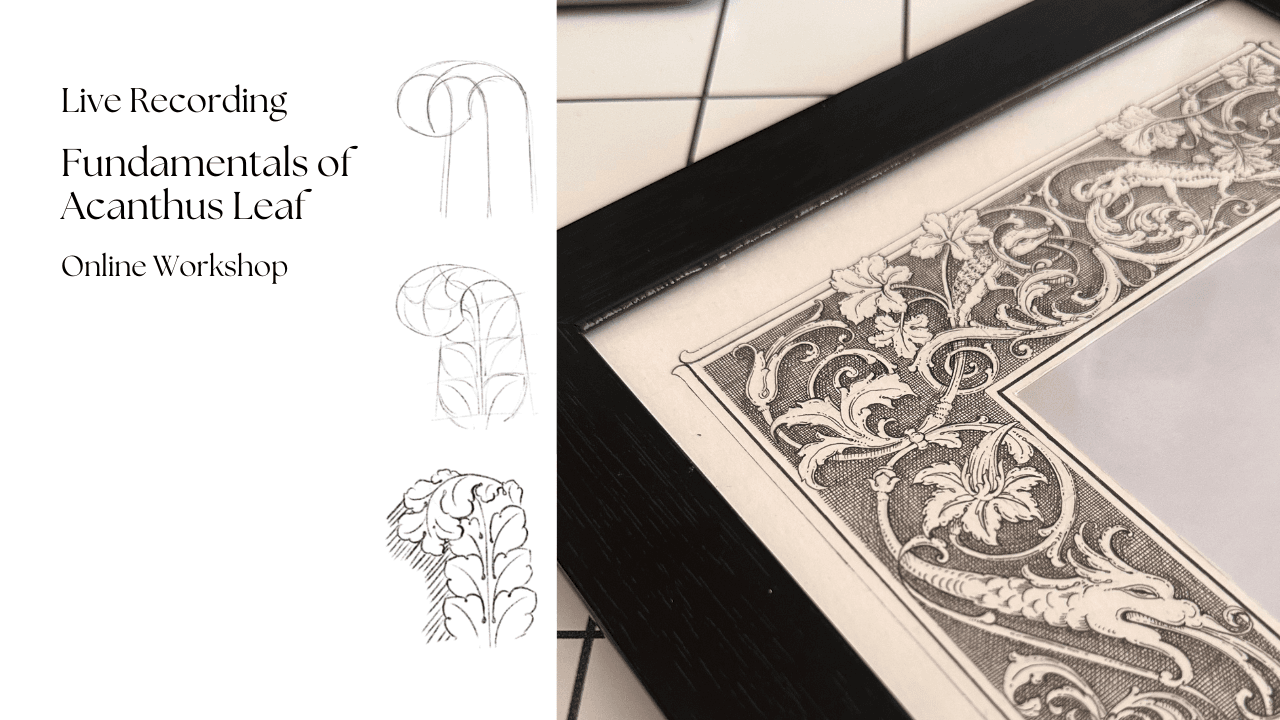
How to Draw an Acanthus Leaf: Beginner Course
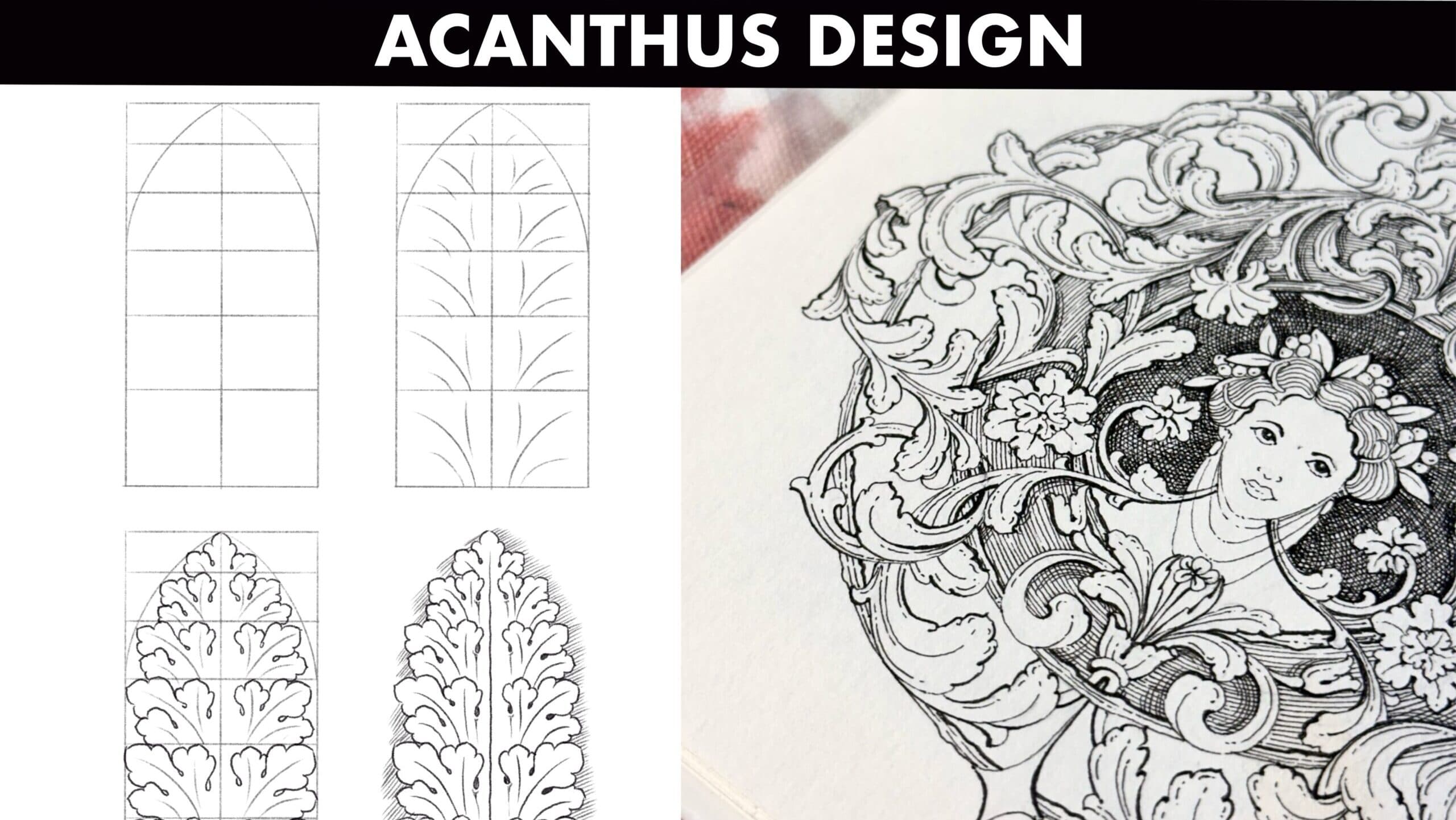
Acanthus Design Course: Leaves, Lobes and Curves
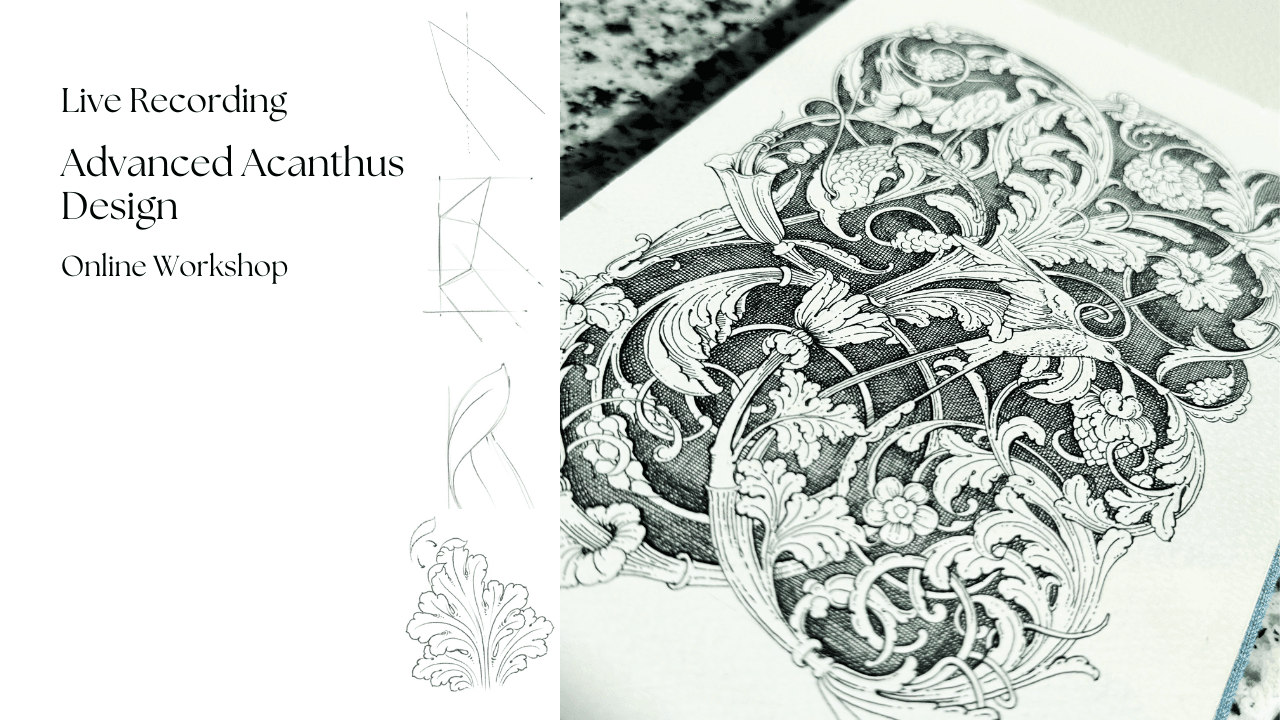
Advanced Acanthus Scrollwork and Composition
Would you like to try it before you buy? I have written a free step by step tutorial on the same motif: How to Draw Acanthus Leaves, Step by Step.
Start learning today
Secure checkout via Razorpay
Also included in the OB Art Circle membership.