Shading Acanthus: Fundamentals
75 reviews across the courses here, averaging 4.9 out of 5.
Learn to see light and form before you shade, and give your acanthus leaves real depth and dimension.
Secure checkout via PayPal
Also included in the OB Art Circle membership, from $19/month.
What you'll learn
- See light and form clearly before you begin to shade
- Break a complex acanthus leaf into simpler, readable forms
- Know where cast shadows and form shadows belong
- Build believable depth through values, not guesswork
- Understand how light wraps around convex and concave surfaces
- Use shading to describe form, overlap and structure
What you will work through
Shading is often treated as a finishing step, but it is really one of the most important tools we have for creating depth, structure and life in ornamental art. Many artists know where to place their darks, yet find it hard to say why a shadow sits there, or how it relates to the form of the leaf.
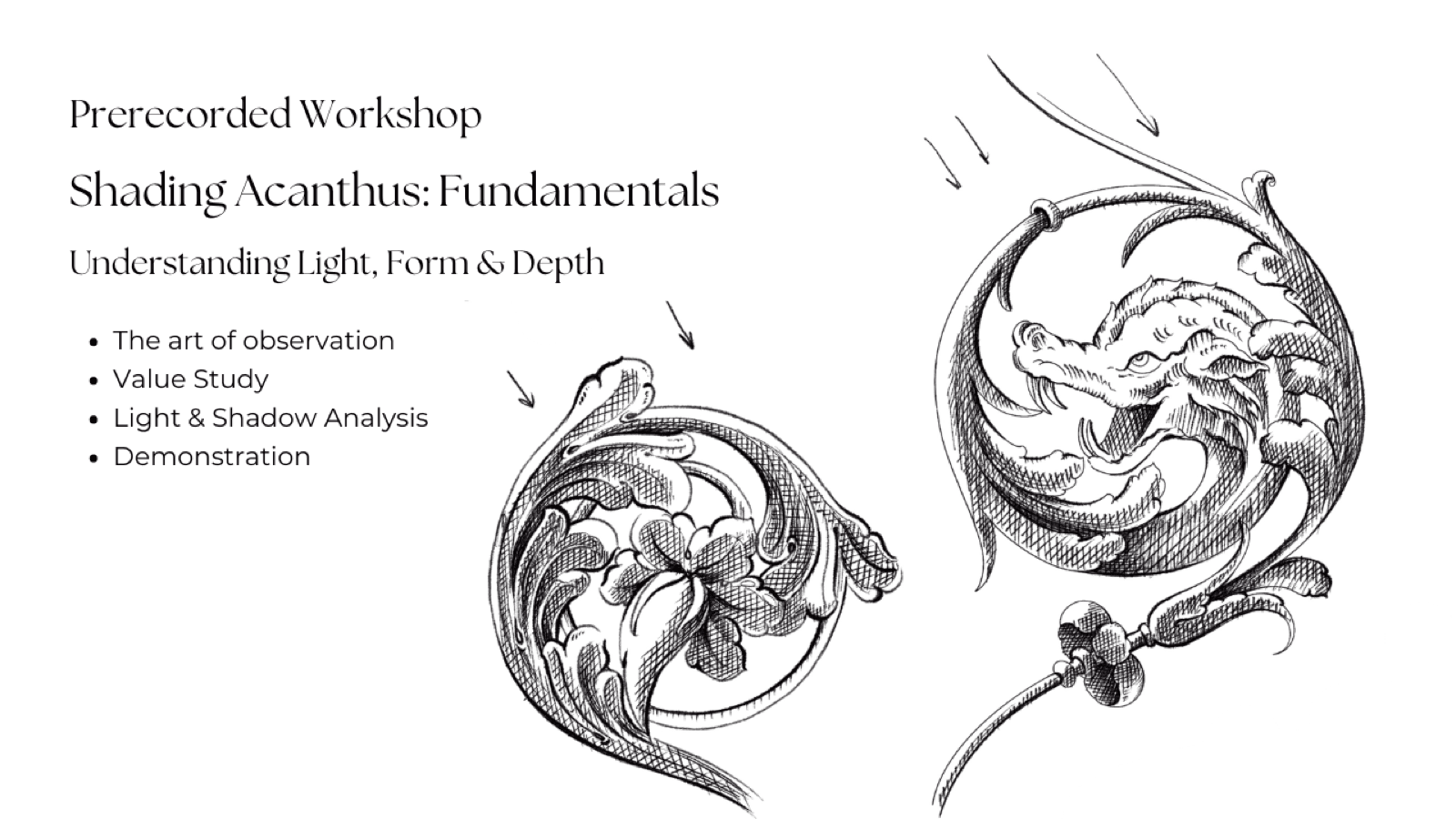
In this workshop we treat shading as an act of observation rather than something to memorise. Through simple examples and small visual experiments, you will learn to study a form, read its values, and understand how light and shadow relate before you ever bring these ideas to an acanthus leaf.
We begin with the art of observing: how to study simple forms and notice the patterns of light and shadow that make an object feel three dimensional. From there we move into value studies, seeing how light, medium and dark values work together to build volume and separation, and why it helps to understand this on plain forms first.
Next come a few light and shadow experiments on simple shapes and curved surfaces. These help you feel how a shadow behaves, how light wraps around a form, and why consistent lighting matters for believable shading. Finally, we bring everything to acanthus examples, looking at cast shadows, form shadows, overlaps, convex and concave surfaces, and the quiet value transitions that make an ornamental leaf feel alive.
By the end you will have a clearer way of seeing light and form before you shade. You will be able to break a complex acanthus leaf into simpler forms, decide where the shadows belong, and build convincing depth through values rather than guesswork. Most of all, you will start to see shading not as filling areas with dark tone, but as a way to describe form, structure, overlap and depth.
Best for
- Artists who want a clearer, more practical way to understand shading
- Beginners meeting ornamental art for the first time
- Experienced artists who want more depth in their acanthus work
- Anyone drawn to ornamental drawing, botanical illustration, engraving-inspired design, architectural ornament or pen and ink
Requirements
- No previous shading experience needed
- A willingness to observe and experiment with simple forms first
Materials
- Pencil
- Eraser
- Fineliner or ink pen
- Drawing paper or a sketchbook
5 lessons · 1h 17m
- 01Introduction2m Preview
- 02The Art of Observation8m Locked
- 03Value Study13m Locked
- 04Light and Shadow19m Locked
- 05Demonstration35m Locked
- Shading ExamplesLocked
- Demonstration ReferenceLocked
Anjali Singh

Anjali Singh is the artist behind Ooshybooshy, specialising in floral, ornamental and acanthus art. 300 students have enrolled in her courses, and she teaches inside the OB Art Circle too, taking people from first strokes to confident, balanced ornamental compositions and sharing her process for structure, references, composition and intricate detailing. More about Anjali.
Reviews
No one has reviewed this course yet. What can be said is the rest: 300 people have enrolled in a course here, and the 75 reviews left on the other courses average 4.9 out of 5.
Yours could be the first review on it.
Questions, answered
Should I buy this course once, or subscribe?+
Both work. A one-time purchase gives you lifetime access to this course, yours to revisit forever. An OB Art Circle membership instead opens this course and every other included course to you, for as long as your subscription stays active.
What materials do I need?+
Each lesson lists what to use. For most ornamental work a sketchbook, pencil, eraser and a fineliner pen are enough to begin.
Is this suitable for my level?+
This course is pitched at an intermediate level, but every step is demonstrated slowly so motivated beginners can follow along.
How do I pay?+
Outside India you pay in US dollars through PayPal, by card or with a PayPal account. In India you pay in rupees through Razorpay, by UPI, card or net banking. The currency is picked for you, and the INR and USD switch in the site header or menu changes it.
Where to go next
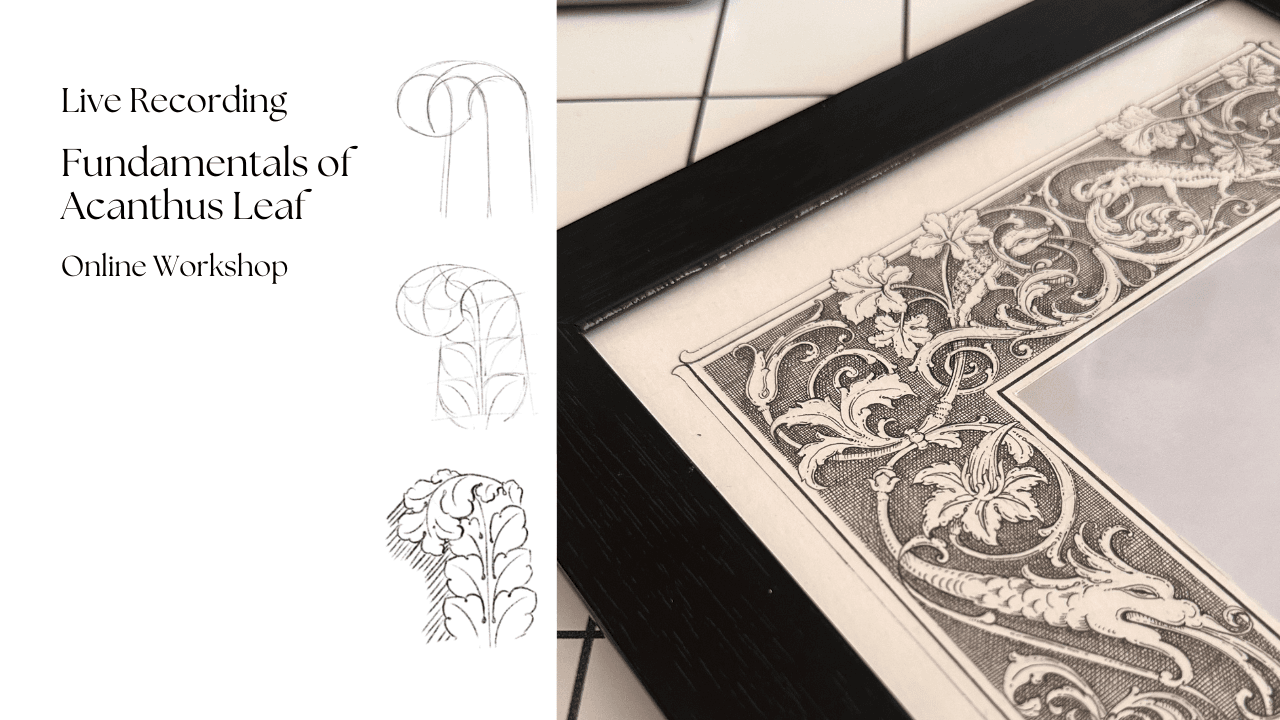
How to Draw an Acanthus Leaf: Beginner Course
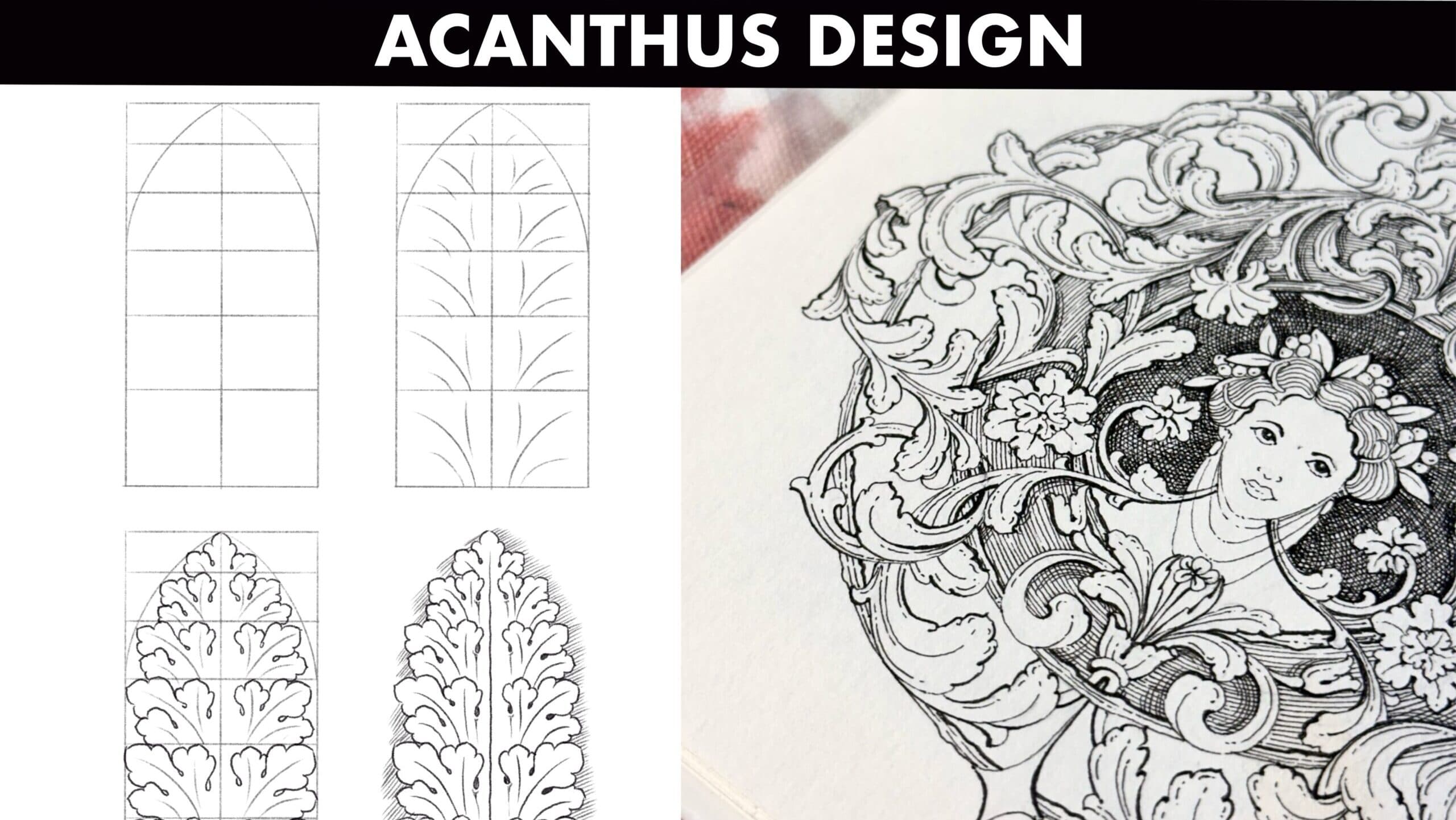
Acanthus Design Course: Leaves, Lobes and Curves
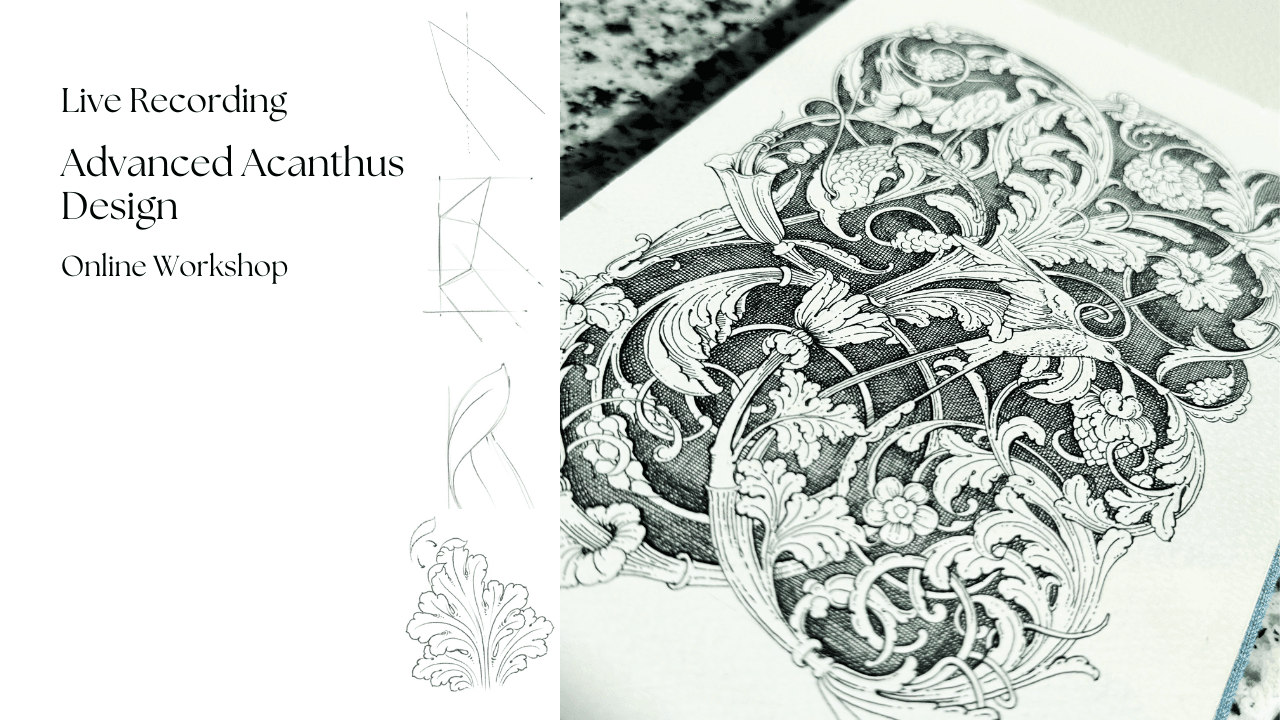
Advanced Acanthus Scrollwork and Composition
Would you like to try it before you buy? I have written a free step by step tutorial on the same motif: Pen and Ink Shading Techniques for Botanical Art.
Start learning today
Secure checkout via PayPal
Also included in the OB Art Circle membership.